Central Ohio winters have a way of turning small home-maintenance problems into larger and more expensive repairs.
A minor exterior crack can admit water. A loose railing becomes more dangerous when steps are wet or icy. A damaged outdoor pipe may fail after a hard freeze. A dryer vent that has quietly accumulated lint can become a serious fire hazard.
That is why fall maintenance should begin before the first hard freeze or snowstorm—not after winter exposes everything that was overlooked.
The goal is not to repair or replace every part of your home. It is to inspect the property while the weather still allows it, identify developing problems, prioritize the most important ones, and complete reasonable preventative work before conditions become difficult.
Start With an Inspection, Not a Shopping List
No two homes need exactly the same fall-maintenance work.
The condition of the property, age of the home, tree coverage, exterior materials, heating system, appliances, and previous maintenance all affect what deserves attention.
A good fall inspection should answer three questions:
- Is there anything that could create an immediate safety hazard?
- Is there anything that could allow water, freezing temperatures, or winter weather to cause more damage?
- Which smaller maintenance items can be bundled into one efficient visit?
This approach prevents homeowners from spending money blindly while ensuring that the most serious concerns are handled first.
Prioritize Safety and Water Intrusion First
Some maintenance items can tolerate a reasonable delay. Others can create significant property damage or personal danger when ignored.
I recommend prioritizing fall maintenance in roughly this order:
- Active leaks and visible roof concerns
- Fire and carbon monoxide protection
- Dryer lint and venting concerns
- Cracked or vulnerable exterior plumbing
- Loose stairs, decks, railings, and walking surfaces
- Openings that could admit water or pests
- Drafts, weatherstripping, filters, and energy-efficiency items
This does not mean the items near the bottom are unimportant. It means immediate hazards and damage pathways deserve attention before comfort and efficiency improvements.
Inspect the Roof Before Winter Weather Arrives
A small roof defect can become much more expensive once cold weather, wind, rain, ice, and snow begin working against it.
Water that enters through the roof may eventually damage:
- Insulation
- Ceilings and drywall
- Paint and interior finishes
- Wood framing
- Electrical fixtures or outlets
What began as a roofing concern can therefore develop into a roofing, drywall, painting, carpentry, and electrical project.
Homeowners can look from the ground for visible warning signs such as displaced materials, obvious openings, damaged flashing, sagging areas, or staining near rooflines. Avoid climbing onto the roof unless you are properly equipped and trained.
If the inspection suggests that the roof itself needs repair, the work should be evaluated by an experienced roofing professional.
Clean Gutters and Check Where the Water Goes
Cleaning the gutters is only part of the job.
The complete drainage path should be considered:
- Are the gutters full of leaves or debris?
- Are the downspouts connected and secure?
- Does water discharge away from the foundation?
- Are extensions crushed, separated, or missing?
- Are exterior drains or catch basins blocked?
- Are there signs that water has been overflowing?
Water that does not drain properly may collect near siding, foundations, walkways, or landscaping. Freezing conditions can then make existing drainage problems more difficult to address.
Because gutter work involves ladders and fall risk, homeowners should consider their comfort, equipment, and site conditions before attempting it themselves.
Inspect Exterior Plumbing Before the First Freeze
Exterior plumbing deserves attention while the ground and weather are still workable.
Look for:
- Visible cracks
- Loose fittings
- Fraying or deterioration
- Leaking connections
- Exposed or vulnerable pipe
- Damaged hose bibs or exterior faucets
Plastic and PVC components should be examined carefully for visible deterioration or previous freeze damage.
I have experienced a cracked PVC pipe failing during freezing weather. The repair required digging into frozen soil, locating the bottom of the failed section, and bringing in equipment because the ground conditions made the work much harder.
The same problem would have been far easier and less expensive to address during warmer weather.
Simple visual inspection and basic protective measures may fall within homeowner or handyman maintenance. Plumbing repairs that require licensed work, permits, or substantial system changes should be referred to the appropriate professional.
Check Steps, Decks, Railings, Gates, and Fences
A loose railing or cracked step may already be unsafe. Winter can magnify the risk by adding water, ice, snow, reduced visibility, and slippery footwear.
During the exterior walkaround, check:
- Whether stairs feel stable
- Whether railings wobble
- Whether deck boards are loose, cracked, soft, or deteriorated
- Whether fasteners are protruding
- Whether gates open, close, and latch properly
- Whether fence sections have loosened
- Whether walkways have developed trip hazards
Some problems may only need tightening or a minor repair. Others may reveal rot, structural movement, or deterioration that requires a larger evaluation.
Do not assume that tightening one visible screw corrects the underlying problem. The attachment point and surrounding material also need to be sound.
Look for Exterior Cracks and Openings
Walk around the siding, trim, penetrations, doors, windows, and other exterior transitions.
Look for:
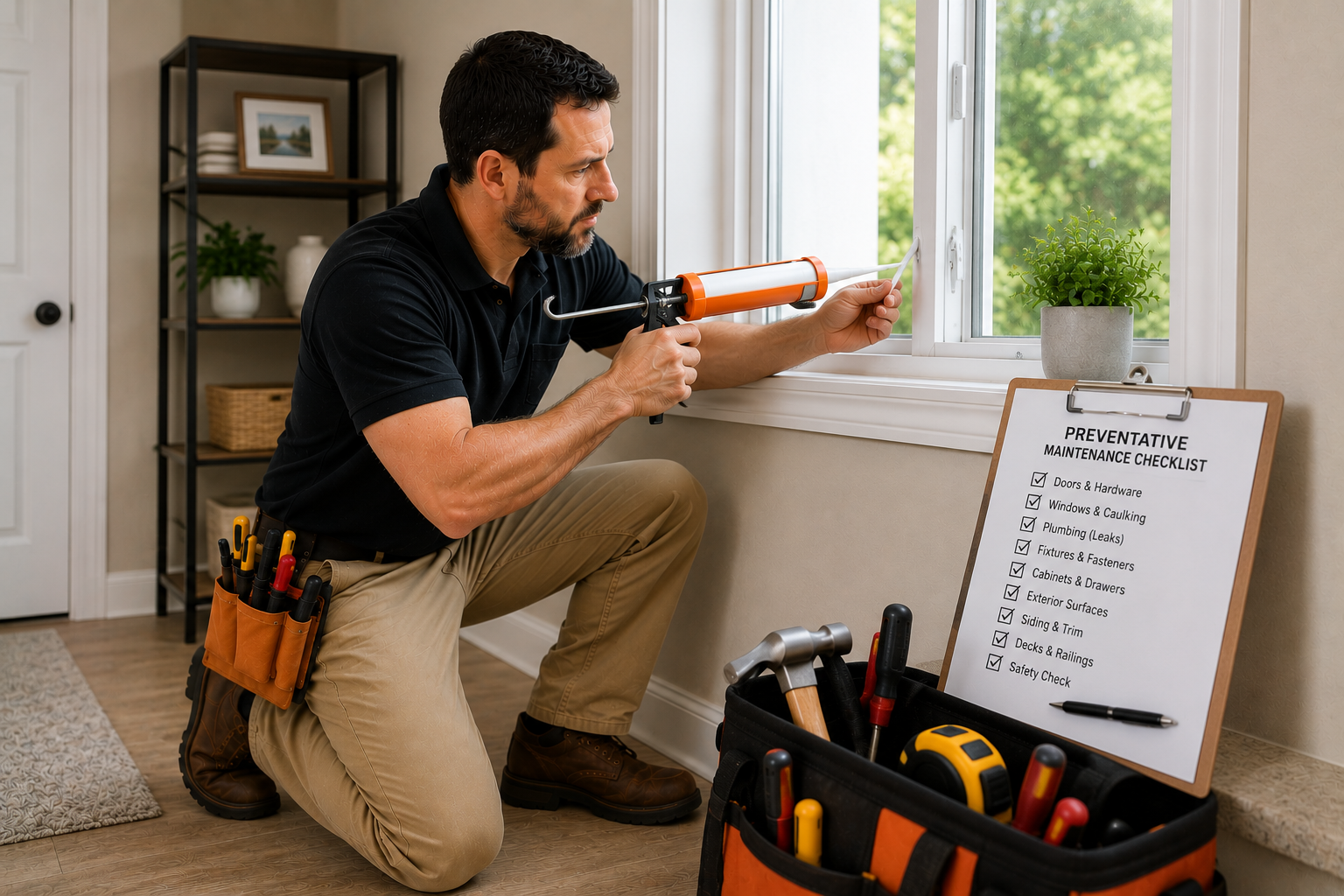
- Separated caulk joints
- Cracks in trim or siding
- Gaps around penetrations
- Loose exterior components
- Openings that could admit water or pests
- Signs of staining or previous moisture
Caulk should not be used to conceal a deeper problem. If an opening resulted from movement, rot, failed flashing, or another underlying condition, that cause should be understood before the surface is simply sealed.
Check Doors, Windows, Locks, and Weatherstripping
Seasonal movement can affect the way doors, locks, hinges, and latches operate.
Inspect:
- Doors that drag, stick, or no longer latch correctly
- Loose hinges and handles
- Worn or missing weatherstripping
- Damaged door sweeps
- Visible light or air around door edges
- Drafts around windows
- Locks that have become difficult to operate
Drafts do not usually create the same immediate danger as an active leak or unsafe railing, but they can reduce comfort and increase the amount of energy needed to heat the home.
Sealing drafts, adjusting doors, tightening hinges, and replacing appropriate weatherstripping are often good candidates for a bundled preventative maintenance visit.
Prepare the Heating and Filtration Systems
Before relying heavily on the heating system, inspect the areas a homeowner can safely access.
Depending on the equipment and manufacturer instructions, that may include:
- Checking or replacing the HVAC filter
- Cleaning visible dust around registers and return grilles
- Ensuring vents are not blocked by furniture or stored items
- Inspecting accessible humidifier filters or pads
- Cleaning the air filter on certain heat-pump water heaters
Not every water heater or humidifier contains a homeowner-serviceable filter. Consult the equipment manual before removing or cleaning any component.
Filter maintenance should follow the manufacturer's instructions because the correct filter type and replacement interval vary by system.
New HVAC installation, internal equipment repair, combustion concerns, and regulated mechanical work should be handled by the appropriate qualified professional.
Clean More Than the Dryer Lint Screen
The lint screen should be cleaned regularly, but lint can also accumulate within the dryer exhaust path.
Check for warning signs such as:
- Clothes taking unusually long to dry
- The dryer or laundry room becoming excessively warm
- A weak airflow at the exterior vent
- Visible lint around connections or the exterior outlet
- A crushed, disconnected, or damaged duct
Lint buildup can restrict airflow and contribute to a dryer fire hazard. The dryer, connection, ductwork, and exterior termination should be considered as one system.
Deep dryer-vent cleaning is an important fall-maintenance item, especially when the duct has not been inspected or cleaned recently.
Test Smoke and Carbon Monoxide Alarms
Fall is a practical time to confirm that smoke and carbon monoxide alarms are present and working.
Homeowners should:
- Use the test function according to the manufacturer's instructions
- Replace batteries when required
- Check the age and replacement guidance for each alarm
- Confirm that smoke and carbon monoxide protection is installed in appropriate locations
- Replace damaged, expired, recalled, or unreliable devices
Smoke alarms and carbon monoxide alarms serve different purposes, even when both functions are combined into one unit.
Carbon monoxide protection is particularly important in homes with fuel-burning appliances, fireplaces, wood stoves, attached garages, or other possible combustion sources.
Replacing a standard alarm battery may be a reasonable homeowner task when the device is safely accessible. New wiring, electrical corrections, or hardwired-device concerns may require an electrician.
What Can Homeowners Handle Themselves?
Homeowners who are comfortable and can work safely may be able to handle several basic items themselves:
- Replacing accessible alarm batteries
- Testing smoke and carbon monoxide alarms
- Changing compatible HVAC filters
- Cleaning the dryer lint screen
- Cleaning accessible appliance filters according to the manual
- Looking for drafts, cracks, loose hardware, and visible deterioration
- Moving objects that block registers or vents
The purpose of a fall checklist is not to convince homeowners that every task requires professional labor.
Handle the simple items you can complete safely. Call for assistance when the work involves height, specialized tools, uncertainty, concealed damage, regulated trades, or a risk that exceeds your comfort level.
Knowing your limits is one reason hiring a handyman can be worthwhile.
What Can Be Bundled Into One Handyman Visit?
Many smaller fall-maintenance tasks can be grouped into one visit, including:
- Cleaning gutters under appropriate site conditions
- Checking downspouts and accessible drainage
- Sealing appropriate exterior gaps
- Replacing weatherstripping and door sweeps
- Adjusting doors, hinges, handles, and latches
- Tightening minor railing, gate, or fence hardware
- Completing small deck or trim repairs
- Cleaning dryer vents
- Replacing accessible filters
- Testing or replacing accessible alarms
Bundling can reduce repeated scheduling, travel, setup, and administrative time. It also gives the homeowner a more complete view of the property rather than addressing each small symptom in isolation.
A detailed scope remains important. Our guide explaining what handymen charge for—and what they should not do explains why preparation, cleanup, documentation, and professional boundaries are part of the service.
When Should Another Professional Be Involved?
A responsible handyman should recognize when a project exceeds the company's capabilities or falls within work that should be completed by a specialized professional.
Depending on the condition and local requirements, referrals may be appropriate for:
- Roof repair
- Major or regulated plumbing work
- Electrical system repairs
- HVAC installation or internal mechanical repair
- Structural damage
- Major foundation or drainage problems
Ohio licensing, registration, permitting, and inspection requirements can vary according to the trade, whether the work is residential or commercial, and the local jurisdiction.
The correct question is not merely, “Can someone physically perform this task?”
It is, “Who is properly qualified and authorized to complete it safely?”
What Happens During a Professional Fall-Maintenance Visit?
A professional walkthrough should generally move from the outside inward.
The exterior review may include:
- Stairs, decks, and railings
- Siding and visible exterior openings
- Gutters and downspouts
- Drainage paths and catch basins
- Exterior plumbing
- Gates and fences
- Doors, windows, trim, and weather seals
- Visible roof concerns observed safely
The interior review may then include:
- Door locks, handles, hinges, and latches
- Weatherstripping and drafts
- Accessible filters
- Dryer vents
- Smoke alarms
- Carbon monoxide alarms
Concerns should be written down and organized by priority.
If the list is short, the homeowner approves the scope, and the necessary tools and materials are available, some repairs may be completed during the same visit.
For larger lists, the company should provide a detailed written estimate or work order before proceeding.
How to Prioritize the Final List
A practical maintenance report should separate findings into three levels:
Priority 1: Address Promptly
- Active roof or water leaks
- Fire and carbon monoxide concerns
- Serious dryer-vent restrictions
- Unsafe stairs or railings
- Cracked exterior plumbing vulnerable to freezing
- Conditions requiring licensed or specialized evaluation
Priority 2: Complete Before Winter
- Gutter and drainage cleaning
- Exterior gaps that could admit water
- Loose deck, gate, or fence components
- Weatherstripping and door adjustments
- Accessible filter maintenance
Priority 3: Comfort and Efficiency Improvements
- Minor drafts
- Nonurgent hardware adjustments
- Cosmetic repairs
- Optional upgrades that improve convenience
This allows homeowners to make responsible decisions without feeling pressured to complete everything at once.
Do Not Wait Until the Weather Makes the Decision for You
Preventative maintenance exists to reduce future repair costs and identify problems before they become larger or more dangerous.
Inspecting the home while the weather is still suitable gives you time to:
- Understand the condition
- Gather estimates
- Prioritize the budget
- Schedule the correct professionals
- Complete the work before winter conditions interfere
At Trinity Handyman, our role is not to pressure homeowners into completing every possible task.
We help identify the concerns, explain which ones deserve priority, bundle appropriate repairs efficiently, and refer work when a different professional is required.
Our purpose is to help improve the quality of life in your home while protecting its condition and long-term value.
An ounce of prevention is worth a pound of cure.
Fall maintenance may require a little time today, but it can prevent a much more difficult repair in the middle of a Central Ohio winter.