

Basement Concrete Floor Coatings
Basement Floor Coatings in Central Ohio
Trinity Handyman coordinates basement floor coating projects throughout Central Ohio for finished and unfinished residential spaces, including recreation, laundry, storage, utility, gym, and workshop areas.
Basement Spaces We Coat
Interior concrete floors evaluated for the way you use the space
Your project is coordinated by Trinity Handyman and completed by an experienced independent concrete-coating team. Finished and unfinished basements, recreation rooms, laundry areas, utility spaces, storage rooms, home gyms, workshops, and other suitable interior concrete floors can each have different preparation and finish needs.
Every basement slab needs an individual review. Moisture conditions, existing coatings or adhesives, cracks and slab movement, surface deterioration, contamination, concrete condition, intended use, and the selected system all affect whether coating is practical.
Finished Basements
Consider a finished concrete-floor system around the room's use, furnishings, access, and existing conditions.
Recreation and Gym Areas
Review floor use, equipment, foot traffic, finish preferences, and maintenance expectations.
Laundry and Utility Rooms
Evaluate suitable work areas around equipment, moisture conditions, access, and cleaning needs.
Storage and Workshop Spaces
Plan a practical finished surface around shelving, tools, storage, and intended activity.
Choosing a Basement Floor Coating System
One coating system is not universally right for every basement
Intended use, moisture conditions, foot traffic, furniture and equipment, desired appearance, existing coatings, cleaning expectations, surface condition, and available coating-system options all shape the recommendation.
Epoxy basement floor coatings, polyaspartic options, polyurea, and compatible systems may be considered when the surface and project conditions support them. Product selection is confirmed for the individual basement rather than assumed from a general category.
Surface Preparation
Preparation starts with an honest review of the existing concrete
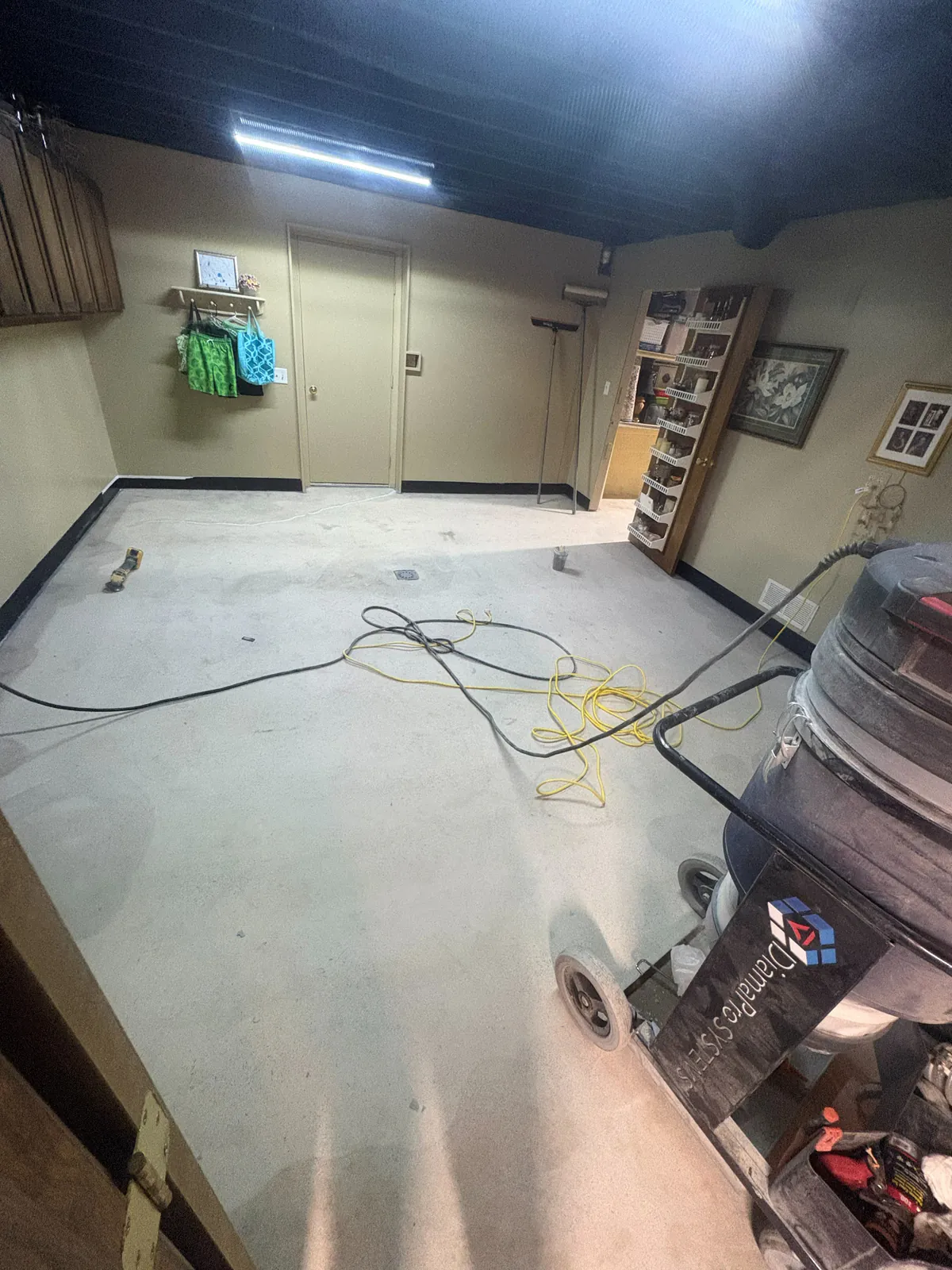
Preparation may include cleaning and contaminant removal, evaluation of existing paint, adhesive, or coatings, suitable mechanical preparation, crack and defect evaluation, moisture review, edge and transition preparation, and protection for walls, equipment, and adjacent finished areas.
The preparation plan is specific to the basement and selected coating system. Cosmetic crack treatment does not correct structural movement, and active moisture or underlying building problems may need to be addressed before coating work proceeds.
Moisture and Existing Basement Conditions
A finished floor is not a substitute for correcting water or building problems
Moisture conditions can affect coating selection and performance. Efflorescence, recurring dampness, prior coating failure, and slab movement require evaluation before work is approved.
Active leaks, water intrusion, foundation concerns, drainage, sump-pump, grading, humidity, mold, radon, and structural issues may need separate evaluation or correction. A coating does not waterproof a basement or resolve underlying building conditions.
Coating, Repair, or Another Solution
Choose the practical next step for the concrete and the basement
Coating may be practical for sound concrete with manageable surface concerns. In other cases, it may not be the right first step.
- Active water intrusion or recurring dampness
- Significant slab movement or structural cracking
- Severe deterioration or contamination that cannot be adequately removed
- Repeated coating failures or unsuitable existing floor systems
- Conditions that need repair or building-envelope work before a finished floor
Scheduling and Return to Use
Follow project-specific guidance before normal basement activity resumes
Coating installation and return-to-use timing depend on the selected system, preparation, moisture conditions, temperature, ventilation, project size, and intended use. The coating team provides project-specific instructions before normal foot traffic, furniture, equipment, or other activity resumes.
Scheduling depends on the basement conditions, project scope, selected system, preparation requirements, and current availability.
Maintenance Expectations
Use care guidance that fits the installed floor system
Routine sweeping, suitable cleaning products, prompt contaminant removal, and project-specific care instructions help guide ongoing maintenance. Avoid damaging chemicals or abrasive methods unless they are included in the care guidance for the installed system.
No finished floor should be described as maintenance-free, slip-proof, crack-proof, peel-proof, indestructible, or guaranteed not to stain. Care needs vary with the selected system, finish, use, and basement conditions.
Frequently Asked Questions
Basement floor coating questions from Central Ohio homeowners
What basement spaces can be coated?
Suitable residential projects may include finished and unfinished basements, recreation areas, laundry rooms, utility spaces, storage areas, home gyms, workshops, and other interior concrete floors. Each slab is evaluated before a coating system is recommended.
Can finished and unfinished basement floors be coated?
Both can be evaluated. Existing finishes, furniture, equipment, access, moisture conditions, concrete condition, and the intended use of the space help determine whether coating is practical.
Are epoxy or polyaspartic coatings available?
Epoxy, polyurea, polyaspartic, and compatible coating systems may be considered when the concrete and project conditions support them. The appropriate system is selected for the individual project rather than assumed from a general category.
Can a damp basement floor be coated?
Recurring dampness, efflorescence, active moisture, and prior coating failure require evaluation before coating is considered. Active leaks or water intrusion may need separate correction first.
Does a basement coating waterproof the floor?
No. A floor coating is a finished surface, not a substitute for foundation, drainage, sump-pump, grading, humidity, or water-intrusion correction.
Can cracked concrete be coated?
Some manageable cracks and surface defects may be addressed during preparation when appropriate. Cosmetic crack treatment does not correct structural movement, and significant cracking or slab movement may call for another approach.
Must old paint or adhesive be removed?
Existing paint, adhesive, and prior coatings are evaluated for adhesion, compatibility, contamination, and removal needs. The preparation plan depends on what is present and how the slab responds.
What colors and finishes are available?
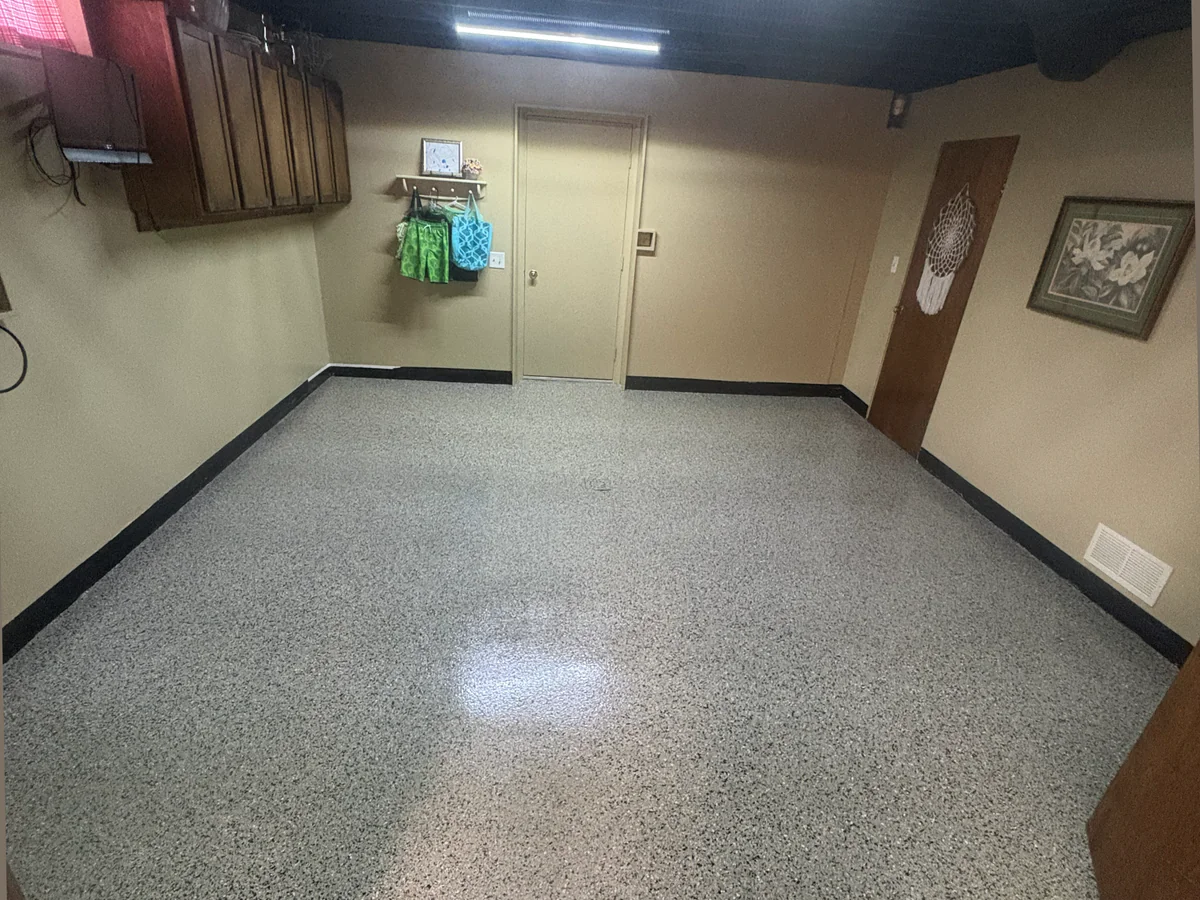
Available options may include solid colors, decorative flakes, multi-tone finishes, selected sheen levels, texture options, and colors coordinated with the basement's use and finishes. Availability depends on the selected system.
Are decorative flakes available?
Decorative flake finishes may be available for suitable basement projects. The selected color blend, texture, and finish are reviewed with the coating system and intended use in mind.
Can basement utility and laundry floors be coated?
Utility and laundry areas may be suitable when the concrete condition, moisture conditions, existing finishes, equipment, and access support the selected coating system.
Can home-gym or workshop floors be coated?
Home gyms and workshops may be suitable candidates. Equipment, floor loading, foot traffic, cleaning expectations, moisture conditions, and the existing concrete are reviewed before the scope is set.
How is the concrete prepared?
Preparation can include cleaning, contaminant removal, existing-finish evaluation, suitable mechanical preparation, crack and defect evaluation, moisture review, edge and transition preparation, and protection for walls, equipment, and adjacent finished areas.
How long before the basement can be used?
Return-to-use timing depends on the selected system, preparation, moisture conditions, temperature, ventilation, project size, and intended use. Trinity provides project-specific guidance before normal use resumes.
How should the coated floor be cleaned?
Routine sweeping, suitable cleaning products, prompt contaminant removal, and project-specific care instructions help guide maintenance. Avoid damaging chemicals or abrasive methods unless the installed system's care guidance supports them.
Should the floor be coated, repaired, or replaced?
Sound concrete with manageable surface concerns may be a coating candidate. Active water intrusion, significant slab movement, structural cracking, severe deterioration, contamination that cannot be adequately removed, repeated coating failures, or unsuitable existing floor systems may make repair, replacement, or another solution more practical.
Ready To Start Your Project?
Let's take care of it for you.
Whether your project takes an hour or a week, Trinity Handyman is ready to help. Contact us today for your free estimate.