
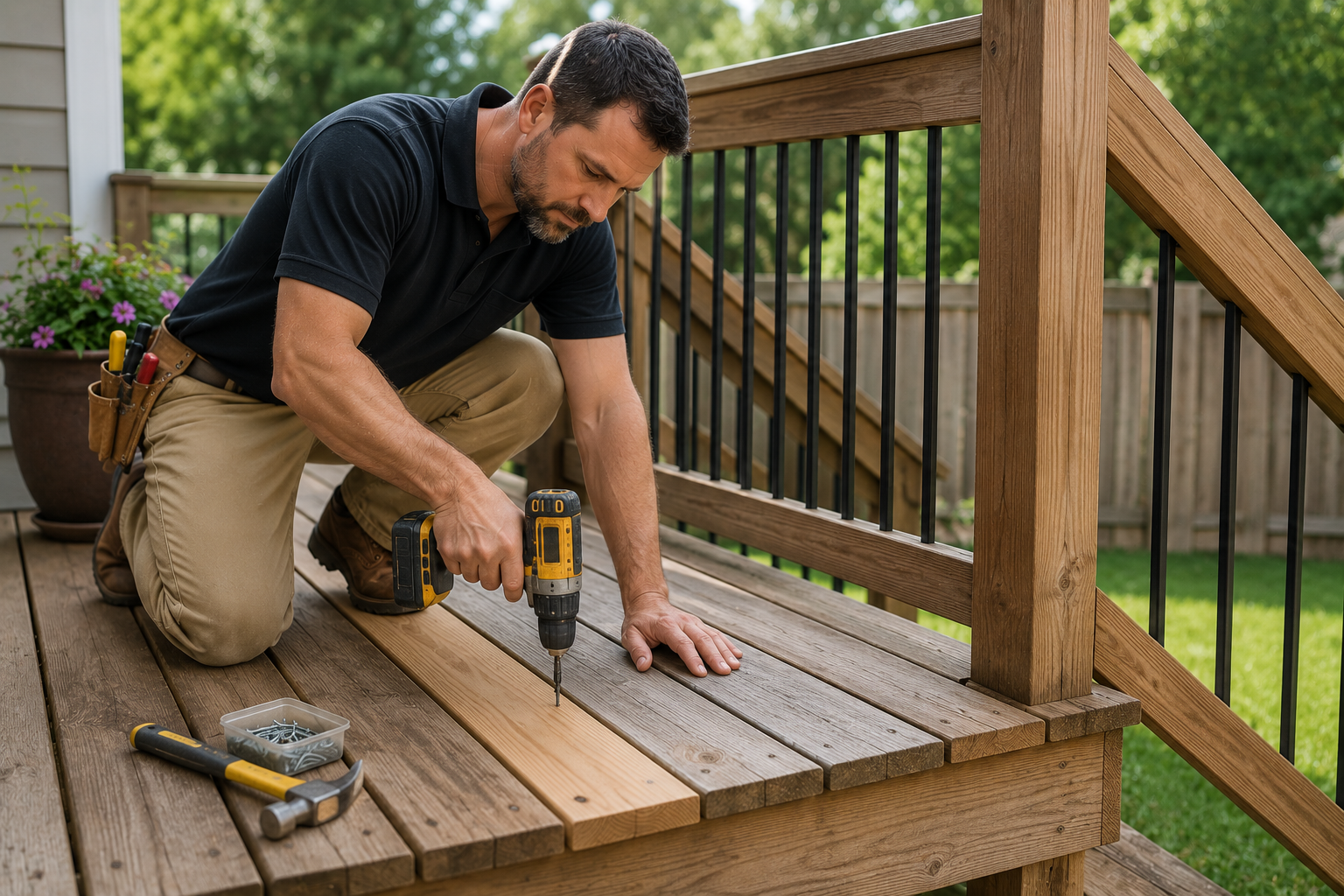
A deck board that has turned gray, developed a few surface cracks, or lost its fresh appearance does not necessarily need to be replaced.
Outdoor wood is exposed year after year to sunlight, rain, snow, freezing temperatures, thawing, foot traffic, and changing humidity. Some visible aging is completely normal.
The important question is whether the wood is simply weathered or whether it has progressed into rot and structural deterioration.
That distinction can mean the difference between cleaning, sanding, and staining a deck—or replacing boards, joists, and potentially much more of the structure.
And one rotten board does not automatically mean you need a new deck.
The right answer comes from understanding why the board deteriorated and inspecting what is underneath it before deciding how far the repair should go.
Weathered Wood and Rotten Wood Are Not the Same Thing
Weathering usually begins at the surface.
Years of sunlight can fade the original color of a wood deck. Rain, snow, freeze-thaw cycles, and normal use can gradually produce:
- Gray or faded coloring
- Minor surface checking
- Small splinters
- A rougher surface
- Faded stain or sealer
Those conditions may make a deck look old without necessarily making it structurally unsound.
Rot is different.
Rot begins affecting the strength and integrity of the wood itself.
Warning signs include:
- Soft or spongy areas
- Wood that flakes or crumbles when gently probed
- Deep cracks running significantly through the board
- Fasteners that no longer hold securely
- Boards pulling away from their framing
- Severe cupping, bowing, or warping
- Persistent dampness or discoloration around a problem area
If the surface looks tired but the board remains hard, stable, properly secured, and structurally sound, restoration may be possible.
If the wood has begun losing its ability to hold fasteners or support weight, you are dealing with a much more serious condition.
Use Your Eyes and Hands Before Assuming a Board Is Rotten
A homeowner can often identify the difference between ordinary weathering and obvious deterioration without removing anything.
Start with a close visual inspection.
Look at the size and depth of cracks. A small surface split caused by years of exposure is different from a crack running deeply across the board.
Then, if the area appears safe to approach, gently press suspected locations.
Healthy wood should generally feel firm.
A soft or spongy section deserves closer inspection.
An experienced inspector may gently probe a questionable area with a screwdriver or similar tool. Wood that easily crushes, flakes, or crumbles can indicate deterioration below the surface.
Fasteners provide another clue.
If screws or nails are repeatedly pulling loose because the surrounding wood can no longer hold them, simply installing another screw may not correct the underlying problem.
The condition of the wood surrounding the fastener matters just as much as the fastener itself.
Start the Inspection Where Water Is Most Likely to Collect
When I inspect an aging deck, I usually begin in the locations most likely to experience repeated moisture.
That may include:
- Areas beneath downspouts
- Low spots where water pools
- Cupped boards that hold water
- Areas beneath planters
- Locations covered by outdoor rugs or furniture
- Shaded portions that remain damp longer
- Places where leaves and debris collect
- Board ends and cut locations
If those high-moisture areas remain in excellent condition, that is encouraging—but the rest of the deck should still be inspected.
If deterioration begins in one of those predictable locations, it may be a localized moisture problem rather than evidence that the entire deck has failed.
That distinction can save a homeowner a significant amount of money.
Why Certain Deck Boards Rot Before the Others
Deck deterioration is rarely perfectly uniform.
One board may fail years before another board installed at the same time simply because their exposure is different.
Downspouts and Drainage
A deck board directly beneath a downspout may repeatedly receive more water than the surrounding decking.
Improper drainage or slope can create the same problem by concentrating runoff in one location.
Repeated wetting followed by slow drying accelerates deterioration.
Leaves and Organic Debris
Leaves and debris trapped between deck boards can hold moisture against the wood instead of allowing the surface to dry.
Those locations deserve particular attention during seasonal maintenance.
Planters, Rugs, and Furniture
A planter that is watered frequently can create a consistently damp area underneath it.
Outdoor rugs and large furniture can also shade portions of the deck and reduce airflow.
That does not mean homeowners cannot use these items. It simply means the areas underneath should occasionally be inspected and allowed to dry.
Shade
Some decks receive strong afternoon sun and dry quickly after rain.
Others remain shaded for much of the day.
The shaded deck may retain moisture longer, creating conditions where deterioration appears sooner.
Staining and Sealing Help Protect the Surface
A properly maintained finish helps reduce the amount of moisture absorbed by exposed wood and protects the appearance of the deck.
When decking is structurally sound but showing normal surface aging, maintenance may involve:
- Cleaning
- Light sanding where appropriate
- Removing loose or deteriorated finish
- Allowing the wood to dry properly
- Applying an appropriate exterior stain or protective finish
This is where a weathered deck can often be restored instead of replaced.
But stain should not be used to hide rot.
If the wood is already soft, crumbling, or structurally compromised, applying another coat on top is cosmetic treatment over a structural problem.
Do Not Cover Rot With Caulk, Filler, or Stain
One of the most important principles in home repair is to identify the root cause before improving the appearance.
Trying to fill rotted wood with caulk, silicone, filler, or stain is essentially putting a bandage over the symptom.
It may temporarily improve how the deck looks while allowing the deterioration underneath to continue.
If moisture is causing the damage, determine:
- Where the water is coming from
- Why the area is staying wet
- Whether the decking alone is affected
- Whether framing underneath is also deteriorated
- How the moisture problem can be corrected before new material is installed
Repair the cause first. Then repair the appearance.
A Rotten Deck Board Does Not Automatically Mean Rotten Framing
This is where a proper inspection can save homeowners from unnecessary replacement.
A damaged surface board does not automatically mean the joist underneath it has failed.
The decking and framing experience moisture differently.
For example, two boards beneath a downspout may deteriorate much faster than the remaining deck while the structure underneath remains serviceable.
In that situation, replacing only the affected material may be completely reasonable.
But you should not assume that either.
Once deteriorated decking is identified, inspect the supporting structure.
What Should Be Inspected Underneath the Deck?
If the underside is accessible, the inspection should go beyond the surface boards.
Important areas include:
- Joists directly beneath damaged boards
- Joist ends
- Connections between joists and beams
- Beams
- Posts
- Fasteners and hardware
- Joist hangers
- Ledger board and connections at the house
- Areas showing persistent moisture or unusual discoloration
The ledger deserves particular attention because it is part of the connection between many decks and the house.
A surface board replacement should never distract from a more important structural connection underneath.
Pay Attention to How the Deck Feels Underfoot
When the deck appears generally intact and there are no obvious unsafe conditions, walking the surface can reveal additional clues.
Pay attention to:
- Soft spots
- Unexpected movement
- Boards lifting underfoot
- Excessive bounce
- Loose boards
- Warped areas
- Fasteners that have stopped securing the decking
A deck board that is visibly deteriorated, detached, or unable to support normal use should not be treated as merely cosmetic.
If there is any concern that an area may not safely support weight, avoid using that portion of the deck until it has been properly inspected.
Joist Protection Can Extend the Life of the Framing
When appropriate, Trinity often prefers protective joist flashing tape over the tops of exposed joists before installing replacement decking.
The purpose is simple: help prevent water sitting on the upper surface of the framing and around fastener penetrations.
It is a relatively small addition compared with the cost of rebuilding framing later.
It is not a substitute for proper construction, drainage, flashing, ventilation, or correctly treated materials. It is one additional layer of moisture protection.
Fresh Cuts in Pressure-Treated Lumber Need Attention
Another commonly overlooked detail occurs when pressure-treated lumber is cut or drilled.
Preservative protection is not necessarily uniform throughout every part of the board.
When fresh interior wood is exposed by a cut or drilled hole, the exposed area should be treated according to the lumber manufacturer's instructions and the applicable preservative-treatment requirements.
This is a small construction detail that homeowners completing occasional DIY projects may understandably overlook.
Years of experience often shows up in details like this—the parts of the job that may never be visible once the deck is finished.
Weathered Deck: When Restoration May Be Enough
If an inspection finds:
- Surface fading
- Minor checking
- Small splinters
- Solid boards
- Secure fasteners
- Sound framing underneath
then full replacement may not be necessary.
Cleaning, sanding where appropriate, repairing isolated imperfections, and applying a suitable exterior finish may restore the appearance and help protect the wood for additional years.
This is normal maintenance—not evidence that the deck has reached the end of its life.
Localized Rot: Replace the Failed Material
If only a few boards are deteriorated and the surrounding structure remains sound, localized replacement often makes sense.
This commonly occurs where:
- A downspout concentrates water
- A planter remained in one location
- A particular board cupped and held moisture
- A small framing section experienced unusual exposure
The damaged boards can be removed, the framing underneath inspected, the moisture source corrected when possible, and the affected material replaced.
There is no reason to demolish a healthy deck merely because a few components reached the end of their useful life early.
When the Decking Needs Replacement but the Structure Can Stay
Sometimes the decking has reached the end of its life while most of the supporting structure remains in good condition.
I recently inspected exactly that situation.
The homeowner had already identified the deck boards as needing replacement and had purchased some replacement material.
Our closer inspection showed that the project required more material than originally expected.
However, it also revealed good news.
The posts were still structurally sound, and approximately 90% of the framing remained serviceable.
A few joists needed replacement, but there was no responsible reason to throw away the healthy framing and posts.
The better approach was:
- Remove the deteriorated decking.
- Replace the damaged joists.
- Inspect the remaining framing while exposed.
- Reuse the sound posts, beams, and joists.
- Add appropriate moisture protection where practical.
- Install the new decking with a suitable fastening system.
That provides the homeowner with a renewed deck surface without paying to replace structural components that still have useful life remaining.
This is the kind of project where a professional deck inspection and repair can change the scope in both directions—sometimes uncovering additional work, but sometimes confirming that expensive components can safely remain.
Match New Material to the Remaining Life of the Structure
This is one of the most important financial considerations in deck repair.
Suppose you install new decking expected to provide many additional years of service.
If the joists, beams, or posts underneath are already heavily deteriorated and likely to fail much sooner, the homeowner may end up paying twice:
- Pay once to install the new decking.
- Remove that relatively new decking later so the failing structure underneath can be rebuilt.
At that point, the cheapest repair today may not be the best value.
The goal should be to match the repair to the reasonable remaining life of the structure.
When Full Deck Replacement Makes More Sense
Full replacement becomes a stronger consideration when deterioration is no longer localized.
Examples may include:
- Widespread deck-board rot
- Multiple deteriorated joists
- Compromised beams
- Deteriorated support posts
- Major connection problems
- Extensive movement or instability
- Repair costs approaching the value of rebuilding properly
The support posts deserve particular consideration.
If the foundational support system is significantly deteriorated, repeatedly patching the surface may stop making financial or safety sense.
In those situations, discussing demolition and rebuilding on a sound foundation may provide better long-term value.
Inspect Before Buying All the Replacement Material
It is understandable for homeowners to identify several bad boards and immediately purchase replacements.
But the visible surface does not always reveal the complete scope.
In the recent project I mentioned, the homeowner had already purchased material based on what could be seen from above.
Once we inspected more closely, we identified additional decking and a few joists that also needed replacement.
The homeowner appreciated knowing that before installation began.
A pre-repair inspection can help determine:
- How many boards actually need replacement
- Whether joists are damaged
- Whether posts and beams can remain
- Whether moisture protection should be added
- What fasteners and hardware are appropriate
- Whether a partial repair still makes financial sense
That information produces a much more accurate material list and project scope.
Fasteners Matter Too
The decking is only useful if it remains securely attached.
Deck lumber expands and contracts as moisture content changes, so the fastening system should be appropriate for the specific decking material and installation.
Depending on the product, that may involve approved face screws, concealed fastening systems, or other manufacturer-compatible hardware.
The important point is not that one fastening system is universally best.
It is that fasteners should be:
- Suitable for exterior exposure
- Compatible with the decking and treated lumber
- Installed correctly
- Positioned to maintain a safe walking surface
Protruding fasteners are more than cosmetic. They can catch shoes or injure someone walking barefoot.
Do Not Judge the Entire Deck From One Bad Board
This is probably the biggest takeaway.
If one deck board has rotted beneath a downspout while everything around it is dry, firm, and properly supported, replacing that board may be all the deck needs.
If several boards across different areas are soft, warped, and no longer holding fasteners—and the framing underneath shows similar deterioration—that tells a very different story.
Neither situation should be guessed from a distance.
Inspect the complete system.
Repair, Resurface, or Replace?
A practical decision can be summarized this way:
Weathered but Structurally Sound
Consider cleaning, sanding where appropriate, repairing small surface imperfections, and refinishing the deck.
A Few Rotten Boards
Identify the moisture source, inspect the framing underneath, and replace the isolated damaged material.
Worn Decking With Sound Framing
Replacing the decking while reusing healthy joists, beams, and posts may provide excellent value.
Localized Framing Damage
Replace the affected framing components along with the decking while preserving the sound portions of the structure.
Widespread Structural Deterioration
Discuss whether full replacement offers better safety, longevity, and return on investment than continuing to patch an aging structure.
When a Deck Problem Becomes a Safety Concern
Minor surface checking and faded stain are typically maintenance concerns.
The conversation changes when you see:
- Boards pulling free from fasteners
- Soft or collapsing sections
- Significant warping
- Loose railings
- Movement in the framing
- Deteriorated structural connections
- Rot in posts, beams, joists, or the ledger
If a portion of the deck appears visibly weak or deteriorated, avoid using that area until it has been inspected.
Saving money is important. Protecting the people using the deck is more important.
The Bottom Line
A faded deck is not automatically a rotten deck.
Sunlight, snow, freezing temperatures, thawing, and years of use naturally change the appearance of outdoor wood.
The key is determining whether that deterioration remains at the surface or has begun affecting the strength of the material.
Start where water collects. Inspect the questionable boards closely. Then look underneath.
Check the joists, beams, posts, ledger, hardware, and structural connections before deciding how much should be replaced.
Sometimes the responsible answer is sanding and staining.
Sometimes it is replacing two boards.
Sometimes it is replacing all the decking and only a few joists.
And sometimes the support structure has deteriorated enough that starting fresh is the better investment.
The best repair is not necessarily the smallest repair or the largest repair.
It is the repair that matches the actual condition and remaining life of the structure.
At Trinity Handyman, our goal is to inspect what is actually there, explain what can responsibly be reused, identify what should be replaced, and help homeowners choose an approach that balances safety, longevity, and value.
If you are already reviewing exterior repairs before the weather changes, our Central Ohio fall home maintenance checklist can help you identify other issues worth inspecting during the same season.